Case study – Localised:
Case study – Localised: From $600k to a zero waste future
A case study in growth capital for non-profit social enterprise.
Te Pae ki te Rangi fund and Localised.
2021
Localised has secured an Auckland Council contract to run community recycling operations across Tāmaki Makaurau. To stand up the operation, they need $2M in debt financing. Te Pae ki te Rangi, managed by Soul Capital, provides $600k in subordinated debt, taking a position behind Kiwibank to make the full lending package work. Localised is a not-for-profit social enterprise. Its directors cannot provide personal guarantees. Without a capital partner willing to take the subordinated position, the deal does not happen.
2025
Nine sites across Aotearoa. $6.3m in revenue. 2,757 tonnes diverted from landfill. 200+ community groups supported. Staff paid at or above the living wage. $225,000 returned in dividends to Zero Waste Aotearoa to fund national advocacy. Four more sites in progress.
This is a case study in what becomes possible when a non-profit social enterprise secures the right capital structure, and what impact investing can do that conventional lending, on its own, cannot. It is also a story about how not-for-profits, with an enterprise mindset, can achieve dramatic growth, deliver strong returns, and give investors direct exposure to local impact and the civic systems that communities actually need.
ANNUAL GROWTH SINCE INVESTMENT · 2022–23 TO 2024–25
from $3.4m
$6.3m
REVENUE
from 843t
2,757t
DIVERTED FROM LANDFILL
from 150
200+
COMMUNITY GROUPS
00. Investment terms and mandate alignment
Localised presents a structural profile that conventional lenders routinely decline: not-for-profit without securable assets or founders who can offer personal guarantees, and a mission that subordinates profit to impact. Soul Capital, through the Te Pae ki te Rangi fund, can fill this gap. The investment below demonstrates how patient, subordinated impact capital can unlock mainstream finance and deliver competitive returns while building infrastructure that communities need.
| FUND / MANDATE | ‘Te Pae ki te Rangi’ / Equity, Inclusion, Environment / Auckland & Northland |
|---|---|
| STRUCTURE | Term loan |
| PRINCIPAL | NZD $600,000 |
| INTEREST RATE | 7.00% per annum |
| DRAWDOWN | October 2021 |
| MATURITY | July 2027 (on schedule throughout) |
| SENIORITY | Subordinated to Kiwibank (NZD $1.4M senior facility) |
| SECURITY | Registered general security deed |
| REPORTING | Quarterly management accounts + annual financials + impact reporting (quantitative and qualitative) |
Te Pae Ki Te Rangi Mandate Alignment
GEOGRAPHY
Whangaparāoa, Onehunga, Otaihanga, Tāmaki, Wairau, Warkworth, Wellsford, Kāpati
CLIMATE & REGENERATION
Localised addresses the systemic failure to recover inorganic and inorganic waste, reduces landfill dependency, and builds circular economy infrastructure at community scale. Localised operates seven different council contracts, mainly focused around recovery and reuse of materials otherwise destined for landfill.
EQUITY & INCLUSION
Localised employs Māori and Pasifika staff in governance, senior management and operational roles, partners preferentially with Māori and Pasifika enterprises, serves 200+ community groups across Foundation North geographies.
CROWD-IN STRATEGY
Te Pae took a deliberate subordinated position to crowd in Kiwibank's senior facility. Patient impact capital de-risks the structure for mainstream lenders.
01. The problem that conventional capital ignores
New Zealand sends more waste to landfill per person than almost any other OECD nation. The system that created that statistic is also the system that attracts conventional investment: centralised, capital-intensive, landfill-dependent. The alternative model—community-led, decentralised, focused on reuse before recycling—has long struggled to access the capital it needs to grow.
New non-profit organisations face a structural financing gap. Without trading history, retained earnings, or equity to offer, they sit outside the criteria most lenders and funds apply as standard. Mission-protective constraints, such as legal structures that restrict share sales or prevent directors from providing personal guarantees, register as risk flags rather than the governance features they are.
Localised is a case in point. As a registered charity wholly owned by Zero Waste Aotearoa, its structure is designed to keep the mission intact. Those same protections are precisely what make it challenging to be investable.
At the same time, central government has been rowing in the opposite direction with plastic phaseouts reversed, requirements for councils to provide organic waste solutions removed, and the Waste Minimisation Fund stripped of its ring-fencing. Localised has grown through all of this. The investment case was therefore not about backing a tailwind as one would with venture capital or private equity. It was about recognising a structural gap in the capital market and deciding to fill it deliberately.
“The financial case was credible and the impact model was strong and coherent. But more than that, there was the potential to enable, or at least demonstrate, a systemic shift in how waste is done in Aotearoa New Zealand. That is what we are here for.”
JAMIE NEWTH · CEO, SOUL CAPITAL
02 . A model built for systems change, not just service delivery
With finance secured, Localised could do what it was created to do. As the commercial arm of Zero Waste Aotearoa, a network of 120 community organisations operating across the country, its core mechanism is operating large-scale regional and national contracts and services, while also assisting the development of more community recycling centres through joint ventures where practical and suitable. Localised brings capital, tendering expertise, operational systems, governance, and health and safety infrastructure. Where joint ventures are established, the community partner brings local knowledge, relationships, and the mandate of their community.
The model was validated first at Mahurangi Wastebusters in Warkworth, where Localised established a partnership with a local trust to bid and win a tender to operate local community resource recovery facilities. By 2021, that joint venture was handling around 40 tonnes of material each week, diverting 50 percent from landfill, employing 18 people, and supporting over 100 community organisations. It was delivering against 23 material streams despite the contract only requiring 12.
The deeper logic is a shift from centralised to decentralised waste management. Soul’s 2021 investment brief described the team as pioneering a model that has the potential to transform resource recovery in Aotearoa NZ. That assessment has proved possible.
“We were the locals, we had the vision, the passion and the support of our community. However, we had absolutely no idea how to run a community recycling centre. Localised came with the knowledge and systems to make it all happen. It has been an awesome partnership.”
TRISH ALLEN · MAHURANGI WASTEBUSTERS, FOUNDING DIRECTOR AND EDUCATION MANAGER
03. The investment decision: what Soul Capital saw in 2021
In September 2021, Soul Capital recommended proceeding with a $600,000 loan at 7 percent interest, backed by a registered general security deed from Localised. At the time, Localised was a new venture with minimal revenue or assets, though it had already secured the Auckland Council inorganic collection contract, a large-scale service covering bulky household items diverted from landfill across multiple sites. The financial projections were sound but the organisation was very early in its traction.
What Soul Capital saw was a team steeped in purpose and deep expertise, with a genuine commitment to the purpose of transforming resource recovery in Aotearoa. Localised had strong organisational backing, having been founded under the auspices of Community Enterprise Network Trust (CENT) and Zero Waste Aotearoa, a national network of 120 community organisations with deep operational experience. The team had 50 combined years in waste management, including Ian Stupple’s tenure as Auckland Council’s General Manager for Waste Solutions, Matthew Luxon’s involvement in establishing the Mahurangi Wastebusters and Gary Kelk’s multiple decades of providing financial, technical and senior management services within the Zero Waste community enterprise. What they could not offer were the typical guarantees traditional financiers would look for. Looking deeper made this transaction possible. Soul championed this team precisely because the mission integrity was evident and the model was proven at Mahurangi. Auckland Council was actively prioritising social enterprise procurement.
The impact proposition included explicit structural commitments: a policy of employing Māori and Pasifika staff in management roles, and an explicit preference for Māori and Pasifika-owned joint venture partners. The Onehunga project was already in the pipeline.
Soul Capital backed the loan because the financial case and lead team were credible and the impact model was coherent. Both things needed to be true.
“Localised are pioneering a model that has the potential to transform resource recovery in Aotearoa NZ in a way that empowers and supports local communities. The team is solid, with the national support of 120 community-based organisations who are shareholders of the parent and leaders in their field. The approach has been proven, the market is moving in their direction.”
SOUL CAPITAL · INVESTMENT COMMITTEE, SEPTEMBER 2021
“Localised was the perfect fit for Onehunga Zero Waste in terms of our vision and kaupapa. They empowered us to understand the RFP tendering process and brought the technical expertise to the table. Our staff enjoy their staff and vice versa and we all value what each other bring.”RON MUAVAE · MANAGING DIRECTOR, ONEHUNGA ZERO WASTE
04. Impact in action: Onehunga and the families it reaches
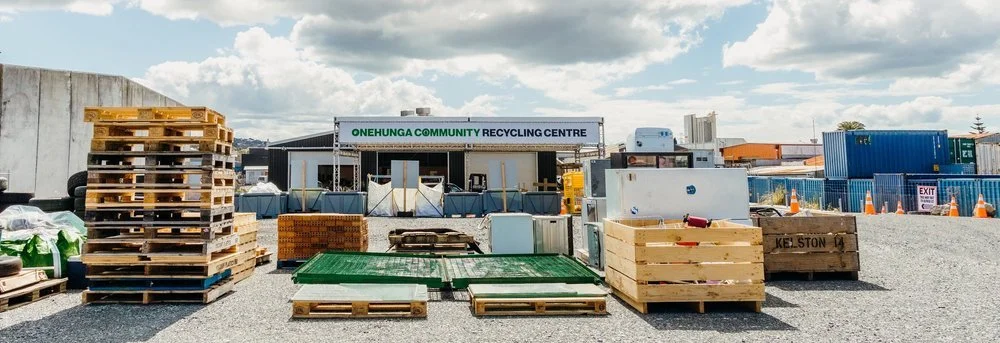
The Onehunga Community Recycling Centre opened in August 2022. It is Aotearoa's first Māori and Pasifika-led resource recovery centre, a 50/50 joint venture between Localised and Synergy Projects Trust. The site includes a cafe, education centre, reuse shop, repair workshop, and drop-off facilities for twelve categories of material.
It exists because Localised could bring to the table what Synergy had and could not purchase: the technical capability to navigate a competitive council tender, and the capital to make it operational. Soul Capital's investment in 2021 was part of what made that possible.
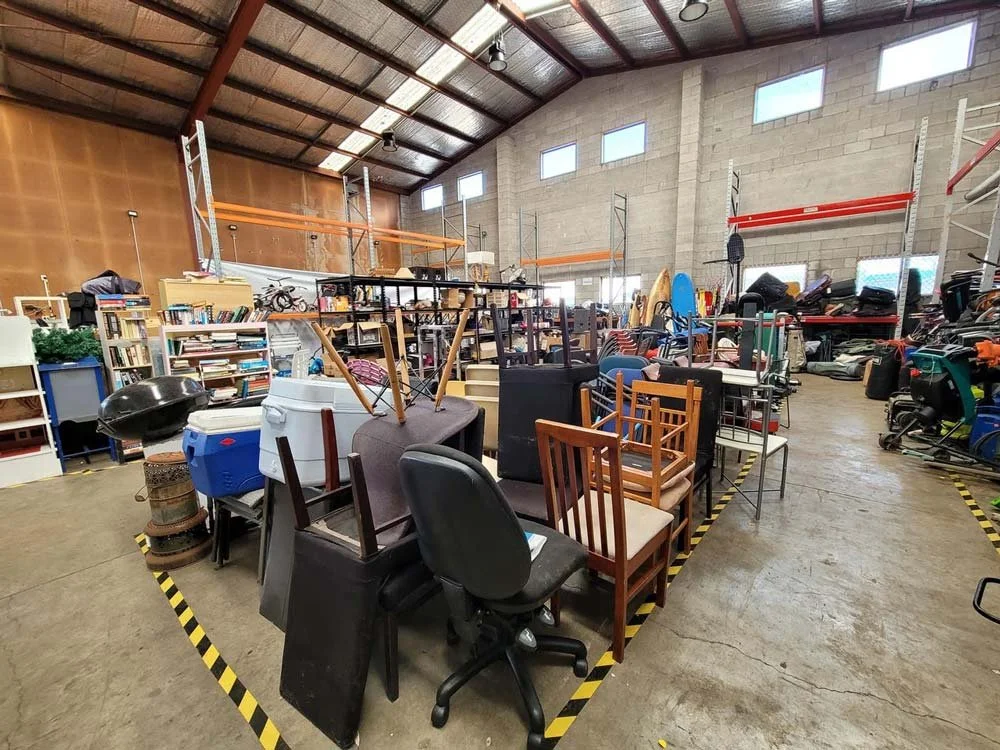
The reach of these sites extends well beyond people who walk through the door. Between the Wairau and Tāmaki Zero Waste Hubs alone, 200+ community groups, social workers, schools, and marae were supported in the past year through distribution of reuse from Auckland Council’s inorganic collections.
One of them is Polly Edwards, a Hope Navigator for the Pride Project. She visits the Tāmaki hub monthly to collect cookware, crockery, appliances, and furniture for 20 families across Takanini, Clendon, Papakura, and Manurewa.
This is what 2,757 tonnes diverted from landfill means at the level of a family in South Auckland.
“I have a passion for the community. I work with all age groups. We've got a lot of grandparents raising grandchildren, being parents again. Everyone is so grateful for access to these resources.”
POLLY EDWARDS · HOPE NAVIGATOR, PRIDE PROJECT
05. Four years on: what the numbers show
The 2024–25 Annual Impact Report tells a story of consistent, compounding growth across every metric that matters. Two figures are worth holding alongside the growth numbers. First: staff remuneration tracks at or above the living wage. Second: $225,000 was returned to Zero Waste Aotearoa in dividends in 2024–25, more than three times the $60,000 returned in the previous two years.
| METRIC | 2022–23 | 2024–25 |
|---|---|---|
| Revenue | $3.41m | $6.3m |
| Number of sites | 7 | 9 |
| Material diverted from landfill | 843t | 2,757t |
| Community groups supported | 150 | 200+ |
| Customer interactions | 10,186 | 46,326 |
| Staff employed | 29 | 64 |
| Dividends to Zero Waste Aotearoa | $60,000 | $225,000 |
| Staff paid at or above living wage | 100% | 100% |
“Some returns are concrete, the tonnes diverted from landfill, the materials finding new life in communities. Others are harder to measure: the human impact, the slow shift in how people think about waste. Localised delivers both. That is what impact investment can and should be and Localised is doing it in award-winning style.”
JAMIE NEWTH · CEO, SOUL CAPITAL
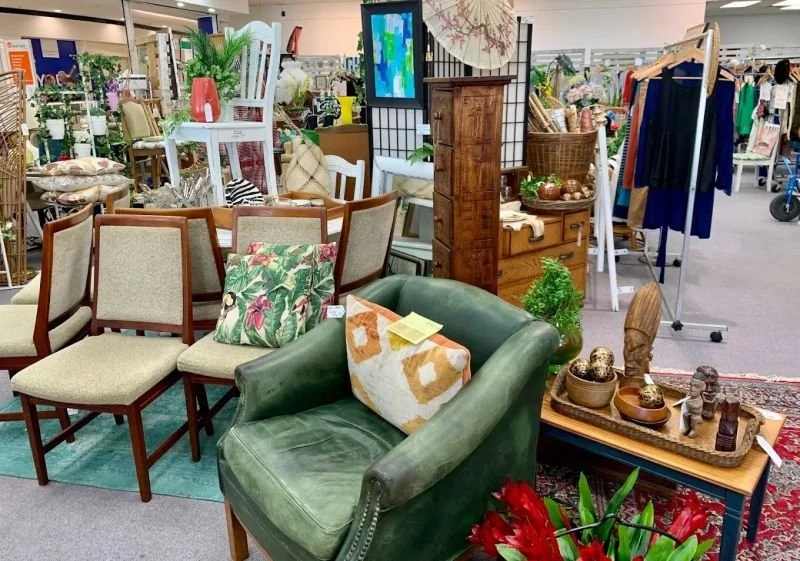
Revenue growth has come not just from scale but from diversification. Alongside the core inorganic collection contracts, Localised has developed new income streams including retail reuse shops, repair and refurbishment services, and expanded operations. This broadens the financial base, reduces reliance on any single contract, and deepens the mission: each new stream is itself a diversion pathway. The dividends returned to Zero Waste Aotearoa fund advocacy at both regional and national level, amplifying the impact of the investment beyond the sites themselves.
Localised’s debt-to-equity ratio demonstrates its commercial performance and possibilities for waste systems that prioritise circularity.
06. What comes next, and what it still needs
Localised’s three-year strategy identifies four priorities: vibrant and successful operations at existing sites, a pay-it-forward commitment to supporting other operators to establish and grow, expanding the footprint through new council contracts, and further diversification of revenue streams to build resilience and deepen mission impact.
The RRN Expansion Project, developed in partnership with Auckland Council, is already underway. It will identify operators and sites for four new community recycling centres in Ōtara-Papatoetoe, Māngere, Tāmaki East, and Drury. A revolving credit facility secured with Hoku Foundation means Localised can move faster on opportunities than a case-by-case funding approach would allow.
The 2025 Impact Report is candid about what has not changed: raising capital remains harder than it should be. The patient, values-aligned relationships with Soul Capital, Hoku Foundation, and Kiwibank are not just important,they are what makes the model possible.
The question Localised's trajectory raises is not whether the model works. Four years of compounding growth have answered that. The question is what becomes possible when more capital is willing to look as carefully as Soul Capital did in 2021.
What this investment model makes possible
The investment worked because the capital was patient, the thesis was specific, and the team had the depth to execute. It also worked because Auckland Council was actively supporting social enterprise procurement, and because a network of 120 community organisations already existed as potential partners. There is also a structural point about the nature of the capital itself. For social enterprises like Localised, asset finance is typically accessible. What is harder to secure is cash flow finance, the working capital and operational funding needed to stand up a contract, meet expenses, and grow. This is precisely where impact investment can play a role that conventional lending cannot.
That is what it means to move when it matters.
“The mahi creates local jobs, strengthens repair and reuse and helps entire neighbourhoods thrive. We're not done yet!”
PAUL EVANS · CEO, LOCALISED · BEST OF THE BEST AWARDS 2025
ABOUT SOUL CAPITAL
Soul Capital is an impact investor backing people and enterprises creating meaningful change in Aotearoa New Zealand. With a multi-asset approach across venture capital, debt, and real assets, we fund high-integrity solutions to systemic challenges in climate, equity, and regeneration.
ABOUT LOCALISED
Localised is the commercial arm of Zero Waste Aotearoa and an Ākina-accredited social enterprise. It operates nine zero waste hubs across New Zealand through joint venture partnerships with community organisations, with four further sites in development.
INVESTMENT
Te Pae ki te Rangi, a Foundation North impact fund managed by Soul Capital, provided a $600,000 subordinated term loan in October 2021. Repayment is on schedule, maturing July 2027. Soul Capital remains an active impact investment partner.
SOUL CAPITAL · Investments on the right side of history