Kai's Education
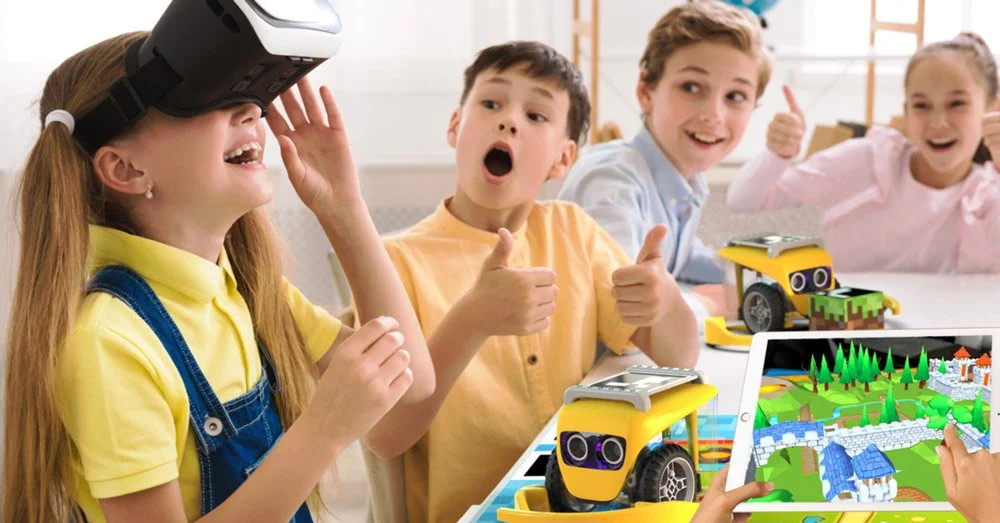
Kai's Education delivers inclusive, hands-on coding and STEAM kits, designed for neurodiverse and visually impaired learners, that help students build foundational digital skills through play-based learning, while supporting teachers with curriculum-aligned, accessible tools for the modern classroom.
Fund: Te Pae ki te Rangi
Transaction Summary
Fund: Te Pae ki te Rangi
Date Invested: March 2025 (Seed)
Instrument: Equity Investment
IRIS+ Category: Education | Access to Quality Education (EdTech)
Why We Invested
Too many young learners reach school age and find that the tools designed to teach them weren't designed with them in mind. For neurodiverse students and those with visual impairments, that gap opens early and compounds quickly.
Kai's Education builds hands-on coding and STEAM kits that work for the students mainstream EdTech tends to overlook. KaiBot and KaiLab are curriculum-aligned, tactile, and built on Universal Design principles. They integrate into Maths, Science, and Literacy without adding to teacher workload. In the US, KaiBot will be the first coding cards available in Braille. That's not a feature; it's a signal of where the design thinking started.
The learning outcomes are real: coding and computational skills, problem-solving, collaboration, confidence in the classroom. But the longer case for Kai's is what early exclusion costs. Digital literacy isn't a nice-to-have. It shapes access to higher education, to employment, to participation. Getting it right at the beginning matters more than catching up later ever can.
Measuring What Matters
Problem:
Young neurodiverse and visually impaired learners have limited access to inclusive, age-appropriate coding education, leading to early exclusion from digital literacy and the skills that shape future opportunity.
What:
Short-term: improved cognitive, computational, and mathematical skills through tactile, play-based learning. Collaboration, creativity, and problem-solving developed through KaiLab’s/KaiBot design challenges. Increased engagement, enjoyment, and sense of belonging in the classroom. Long-term: early skill acquisition linked to improved access to higher education and employment. Classroom confidence builds social skills that carry into other areas of life.
Who:
Neurodiverse and visually impaired K-12 learners that use KaiLab’s/KaiBot, many of whom have limited access to STEAM education.
How Much:
Scale: number of students and classrooms reached, estimated from units sold. Depth: degree of improved skill acquisition through integrated learning, benchmarked against other robotics learning tools. Duration: improved early STEAM outcomes with downstream effects on education and employment.
Contribution:
Direct attribution to individual learning outcomes is difficult to isolate, given the range of factors that influence skill acquisition and belonging. What is measurable: KaiBot will be the first coding cards available in Braille, extending accessible STEAM learning to visually impaired students who have had no equivalent option.
Impact Risk:
External risk: Risk that school funding or procurement channels make it difficult to enhance Kai's reach into schools.
Inequity risk: Despite the incorporation of Universal Design principles and the creation of materials in Braille and te Reo Maori, there's a risk that a lack of access to Kai's tech for students with disabilities or other priority communities may persist or even worsen due to inequitable education contexts.
Impact Measures:
Number of Braille coding kits ordered, as a measure of reach into the visually impaired student community. Quantitative or qualitative insights: Validate impact for children with learning impairments.